Full Mouth Rehabilitation Ponte Vedra Beach
Renew Your Smile’s Health and Function
At Palm Leaf Dental in Ponte Vedra Beach, we understand that some people are facing severe and complex oral health problems. If that is true of you, rest assured that we want to help! We offer a variety of services that have the potential to renew your smile’s health and function, including full mouth rehabilitation, which may also be called full mouth reconstruction. How does this customized service work, and what else should you know about it? Continue reading below to discover valuable information, or contact us directly to request a consultation.
Why Choose Palm Leaf Dental for Full Mouth Rehabilitation?
- Partnered with Local Specialists for Comprehensive Dental Implant Treatment
- Digital Smile Design Software Lets You Preview Your Results
- Beautiful Same-Day Crowns Crafted by CAD/CAM Technology
Is Full Mouth Rehabilitation Right for Me?
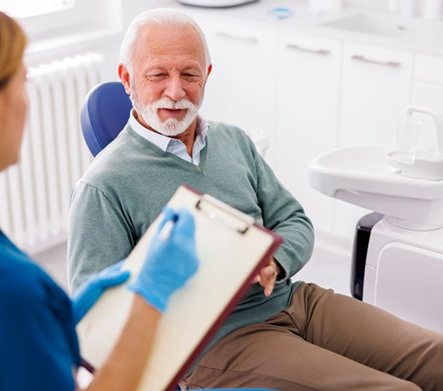
Even if you have been struggling with poor oral health for a long time, there is still hope for you to rebuild a strong and confident smile! Full mouth rehabilitation combines a variety of treatments with the goal of addressing everything that is negatively affecting your mouth’s function, health, and appearance. It can help with issues such as:
- Missing teeth
- Loose teeth
- Badly damaged teeth
- Unsightly or dysfunctional old restorations
- And more!
During your consultation, we can discuss how full mouth rehabilitation may be able to transform both your smile and your quality of life.
The Full Mouth Rehabilitation Process
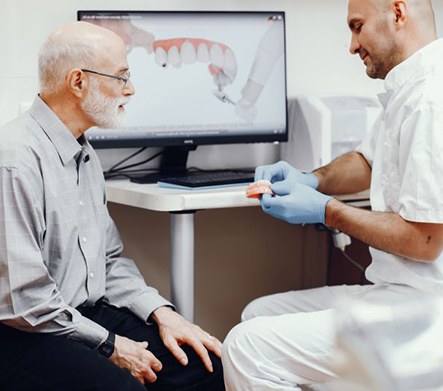
To get started with full mouth rehabilitation, you will need to attend a consultation. During this important appointment, our team will examine your mouth and learn about your goals for treatment. We can also use digital technology to capture images of your smile, which we will then upload into a sophisticated software program. We can use it to give you a realistic preview of your results.
After we decide on a treatment plan, you may go through several procedures before you achieve your final results. For example, full mouth rehabilitation often involves:
- Gum disease treatment to get rid of dangerous infections.
- Dental implants or other forms of tooth replacement to fill gaps.
- New restorations to fortify damaged teeth or replace old crowns and fillings.
- Cosmetic treatment to put the finishing touches on your rebuilt smile.
Depending on the details of your unique treatment plan, full mouth rehabilitation may take place across weeks or months.
Understanding the Cost of Full Mouth Rehabilitation

The cost of full mouth rehabilitation depends on which treatments you undergo, as well as the extent of those treatments. During your consultation, we can provide you with a price estimate that is tailored to your unique circumstances. We will also be happy to help you understand payment options. For example, we welcome dental insurance and are even in-network with a few popular plans. We also accept low-interest financing through CareCredit.
Full mouth rehabilitation might seem pricey, but remember that it is an investment in both your health and your quality of life!
Full Mouth Rehabilitation FAQs
How Long Does a Full Mouth Rehabilitation Procedure Take?
The timeline for a full mouth rehabilitation in Ponte Vedra Beach depends on several factors, such as the number of teeth involved, the severity of your oral health issues, and the specific services you need. It should be noted that some treatments can be completed relatively quickly while others might require more time. For example, repairing a damaged tooth with a crown typically only takes two appointments separated by a matter of weeks. Meanwhile, replacing missing teeth with dental implants can take months or even a year.
When you commit to undergoing a full mouth rehabilitation, our team will examine your teeth and gums thoroughly in order to learn as much as possible about your situation. Once we know what your needs are, we can give you an estimate of how long it will take to restore the health and appearance of your smile.
Does Getting a Full Mouth Rehabilitation Hurt?
No matter what treatments make up your full mouth rehabilitation plan, you can rest assured that our team will always take whatever steps we can to make sure that your experience is as comfortable as possible. During particularly complex treatments, we can numb your mouth with a local anesthetic; that way, you won’t feel any discomfort while we’re working on your smile.
You may experience some level of soreness after certain procedures. As such, our team will give you a number of aftercare instructions that can go a long way toward helping you keep your discomfort under control. For example, you may need to plan on staying away from hot beverages and only eating soft foods for a certain amount of time.
Can I Get a Full Mouth Rehabilitation If I Smoke?
The answer can vary from patient to patient. Our team will need to carefully evaluate your oral and overall health in order to determine whether you’re a viable candidate for a full mouth rehabilitation.
Note that if you do qualify for the process, you will likely be told to stay away from tobacco products for a certain amount of time before and after your treatment. This is due to the fact that tobacco can interfere with the healing process and increase the risk of problems occurring after dental implant placement and other complex procedures. It can often be difficult to give up smoking on your own (even if it’s only for a little while), so don’t be afraid to reach out to your primary care physician to see how they can help.
How Long Will My Full Mouth Rehabilitation Results Last?
It’s difficult to give an exact answer to this question since it is largely influenced by the specific treatments that were performed. That being said, it should be noted that taking good care of your teeth and gums can go a long way toward helping the results of your full mouth rehabilitation last longer. If you want to keep your newly improved smile in excellent shape, then it’s recommended that you:
- Practice good oral hygiene by brushing twice a day and flossing once a day.
- Stay away from hard foods that can damage teeth and dental restorations.
- Break bad oral habits like tearing open packages with your teeth.
- Visit your dentist at least twice a year for routine checkups and cleanings.